

Walks and leash trainingSo walks stop being a struggle.
Pulling, stopping at every smell, reacting to everything that passes. We work on the walk on your street, with your dog, until you're both walking on a loose leash.
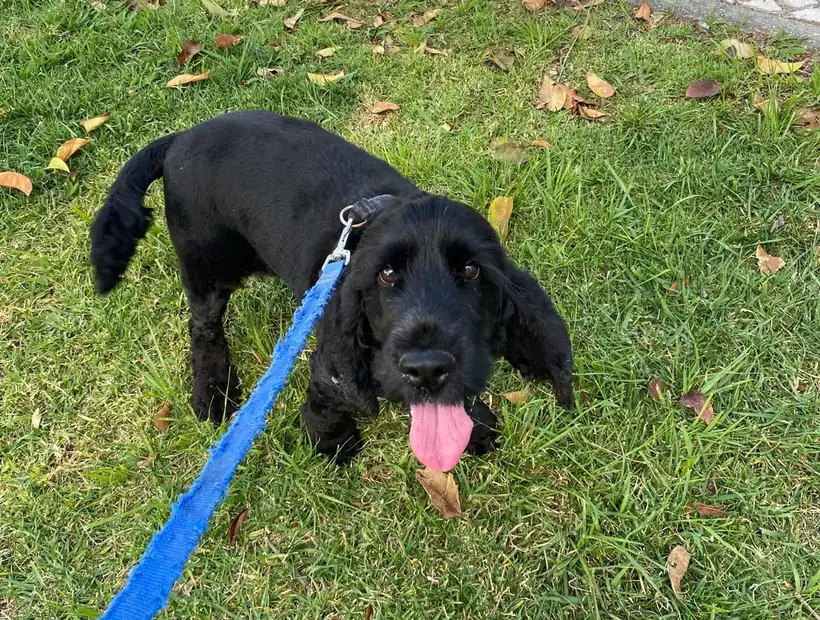
A walk you both enjoy
Walking on a loose leash
By your side, without being dragged or having to pull.
Distractions and focus
People, smells and noises, without losing attention on you.
Meeting other dogs
Passing other dogs calmly, without barking or lunging.
Leaving the house
Going out calmly, instead of starting the walk already overexcited.
How we work
We talk
You tell me what's going on, what you've already tried and what you'd like to change.
Initial assessment
A first session at your home to get to know the dog, the family and the routines, and to set goals.
Private sessions
One-to-one sessions at your home, with exercises adapted to your daily life.
Independence
You learn to apply the strategies yourself and the sessions become less frequent.
The walk as a challenge
(…) Great for separation anxiety and correcting destructive behaviours, or for the "simple" leash pulling that can turn the walk into a challenge for the animal and its owner. (…)Translated from Portuguese
Frequently asked questions
Why does he pull so much?
Because pulling works: if a tight leash gets him where he wants to go, he has learned that pulling pays off. The work is teaching him that walking by your side pays off more.
Why do we train on my street?
Because that's where he pulls. A calm walk on a training field doesn't carry over by itself to your street, with its smells, its corners and your neighbours.
Are walks a struggle?
Tell me what your walks are like. I'll tell you what I would do.